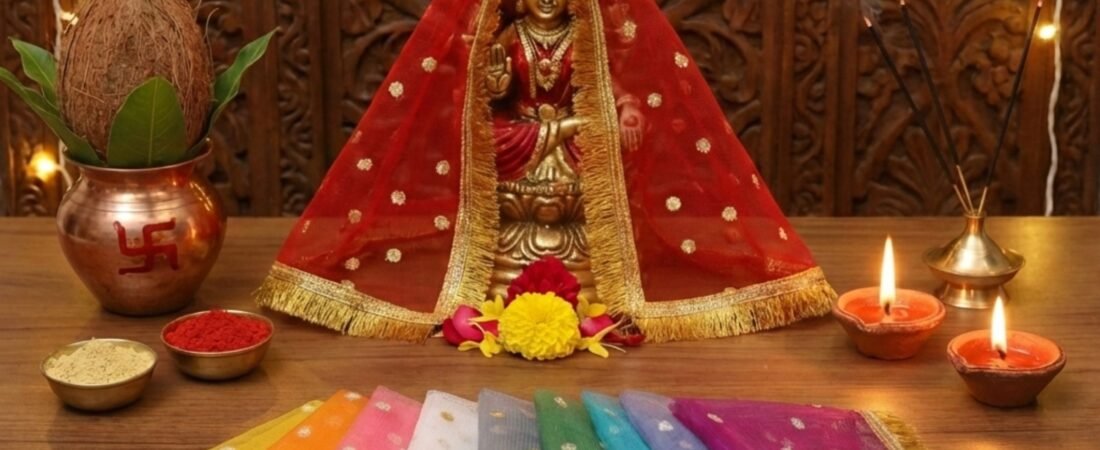
Offering a chunri to Mata Rani is shringaar, the act of dressing the goddess. Which colour you offer is mostly a matter of occasion, the particular devi and what your family has always done. There is more room here than people assume.
Red is the default, and there is a reason
Red is the colour most associated with Durga and with Shakti generally. It carries auspiciousness, married status and the energy of the goddess in her protective form. If you offer only one chunri and keep it through the year, red is the one.
At Vaishno Devi, Jwala Ji and most Shakti peethas, red is what pilgrims carry. It is also the standard offering at a jagrata or a Mata ki Chowki.
Colour by devi
- Durga, Vaishno Devi, Kali – red, sometimes deep maroon for Kali.
- Lakshmi – red or pink, and gold work is especially suited to her.
- Saraswati – white or yellow. Yellow is usual at Basant Panchami.
- Santoshi Mata – red, and Friday is her day.
- Gauri or Parvati – green, and green is the usual offering at Hartalika Teej and Gangaur.
- Ambe or Sherawali – red, with orange as a common alternative.
Colour by day of the week
If you change the chunri regularly rather than seasonally, the weekday colours are a simple system to follow. Sunday orange, Monday white, Tuesday red, Wednesday royal blue, Thursday yellow, Friday green, Saturday grey.
This is the same scheme the Navratri rotation is built from, which is why the nine day colour list changes each year depending on the weekday Navratri opens on.
Colour by occasion
- Navratri – follow the nine day rotation, or keep red throughout.
- Diwali and Lakshmi Pujan – red or pink with gold work.
- Karwa Chauth and Teej – red for Karwa Chauth, green for Teej.
- Grah Pravesh – red or yellow, both read as auspicious for a new home.
- A wedding in the house – red, and often a new chunri offered rather than an existing one.
- Everyday puja – whatever is clean and undamaged. A faded or torn chunri should be replaced rather than kept on the murti.
What to do with an old chunri
Once a chunri is worn through or faded it should come off the murti. It is not thrown in household waste. The usual practice is to immerse it in flowing water, or to leave it at a temple where such items are collected, or to fold it away in the mandir if you would rather keep it.
Many households now avoid river immersion for anything with sequins or synthetic thread, for the obvious reason. Leaving it at a temple collection point is the practical alternative.
Keeping a few colours on hand
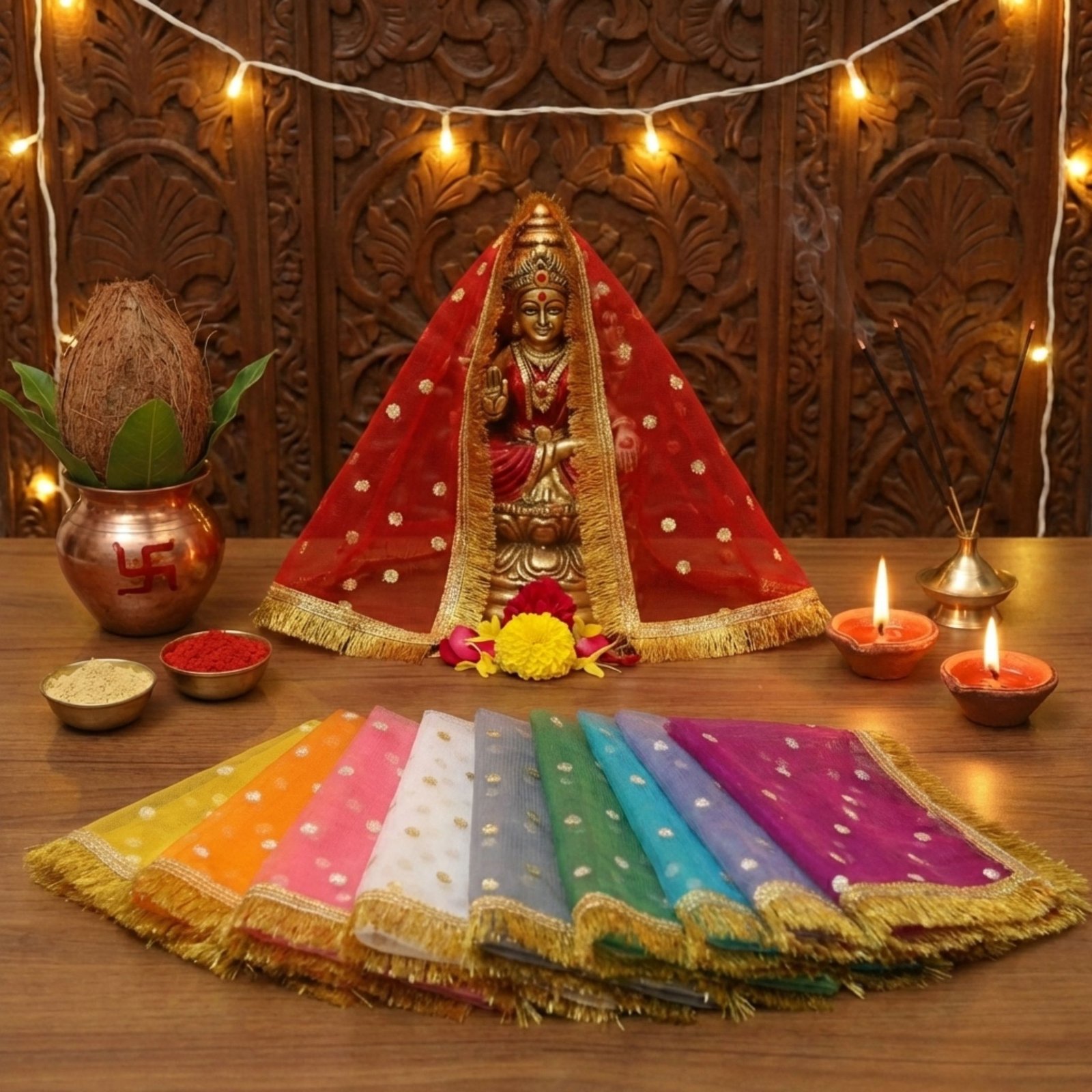
If you follow the weekday scheme or the Navratri rotation, buying single pieces one at a time gets expensive and you inevitably end up missing the colour you need on the morning you need it. A set of ten in the murti size covers most of the year’s occasions in one go and stores flat in the mandir drawer.
Frequently asked questions
Which colour chunri is best for Mata Rani?
Red is the most widely offered and suits every form of the goddess. Other colours are chosen by the devi, the weekday or the festival.
Can I offer a green chunri to Durga?
Yes. Green is associated with Gauri and with growth, and it appears in the Navratri rotation every year. Red remains the most common choice for Durga specifically.
How often should the chunri be changed?
There is no rule. Some change it daily with the weekday colour, some at each festival, some once a year. Replace it whenever it is faded, torn or soiled.
What should I do with a torn or old chunri?
Take it off the murti and either leave it at a temple collection point or fold it away respectfully. It should not go into ordinary household waste.
Is a black chunri ever offered?
Generally no. Black is avoided in most Hindu puja contexts, though some Kali traditions are an exception. Deep maroon is the usual substitute where a dark shade is wanted.
Can I use the same chunri for different deities?
Yes, provided it is clean. Many families keep a small set and move pieces between the murtis on the mandir as occasions change.