Sharad Navratri 2026 begins on Sunday 11 October and runs to Monday 19 October, with Vijayadashami on Tuesday 20 October. The nine colours this year are orange, white, red, royal blue, yellow, green, grey, purple and peacock green, in that order.
If that list looks different from the one you saved last year, it should. The sequence is not fixed. It moves with the calendar, and that catches people out every single year.
Navratri 2026 colours, day by day
| Day | Date | Goddess | Colour |
|---|---|---|---|
| 1 | Sunday 11 October | Shailputri | Orange |
| 2 | Monday 12 October | Brahmacharini | White |
| 3 | Tuesday 13 October | Chandraghanta | Red |
| 4 | Wednesday 14 October | Kushmanda | Royal Blue |
| 5 | Thursday 15 October | Skandamata | Yellow |
| 6 | Friday 16 October | Katyayani | Green |
| 7 | Saturday 17 October | Kalaratri | Grey |
| 8 | Sunday 18 October | Mahagauri | Purple |
| 9 | Monday 19 October | Siddhidatri | Peacock Green |
Why the order changes every year
The colours are tied to the weekday, not to the goddess. Each day of the week carries its own colour in this tradition: Sunday is orange, Monday white, Tuesday red, Wednesday royal blue, Thursday yellow, Friday green and Saturday grey.
Navratri is nine days but the week is only seven, so the last two days would otherwise repeat. Purple and peacock green fill those slots. Since Navratri 2026 opens on a Sunday, the run starts at orange and everything after it follows on.
This is also why you will find lists online that disagree. Some are last year’s sequence republished with new dates pasted over the top. If a list you are reading starts on a colour that does not match the weekday of 11 October, it has not been updated.
Ashtami and Navami fall together in 2026
Worth planning around. In 2026 the Ashtami and Navami tithis merge onto Monday 19 October rather than falling on separate mornings. Sandhi Puja sits at the junction, roughly 10:27 AM to 11:15 AM.
Practically, that means Kanya Pujan, the Navami havan and the visarjan preparations all land on one day for most households. If you normally spread them across two mornings, you will want to decide in advance which rituals you are keeping and who is doing what. Regional calendars do vary on this, so check your local panchang before you fix the day.
Ghatasthapana on the morning of Sunday 11 October has a muhurat of roughly 06:19 AM to 10:12 AM, with the Abhijit window around 11:44 AM to 12:31 PM if the morning slot is not workable.
Dressing the mandir in the colour of the day
Wearing the colour is the part most people know. Dressing the murti in it is the older practice, and it is the one that actually shows in your mandir photographs.
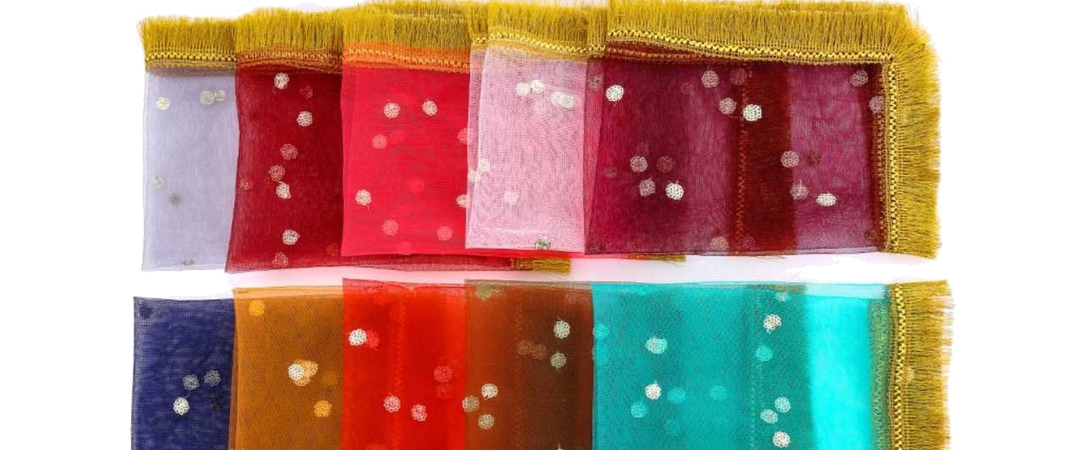
A small chunri changed each morning does the job without you buying nine outfits. Our set of ten mata ki chunnis covers seven of the nine 2026 colours exactly. Purple on day eight and peacock green on day nine are not in it, so most households use maroon for purple and repeat the green on the final day.
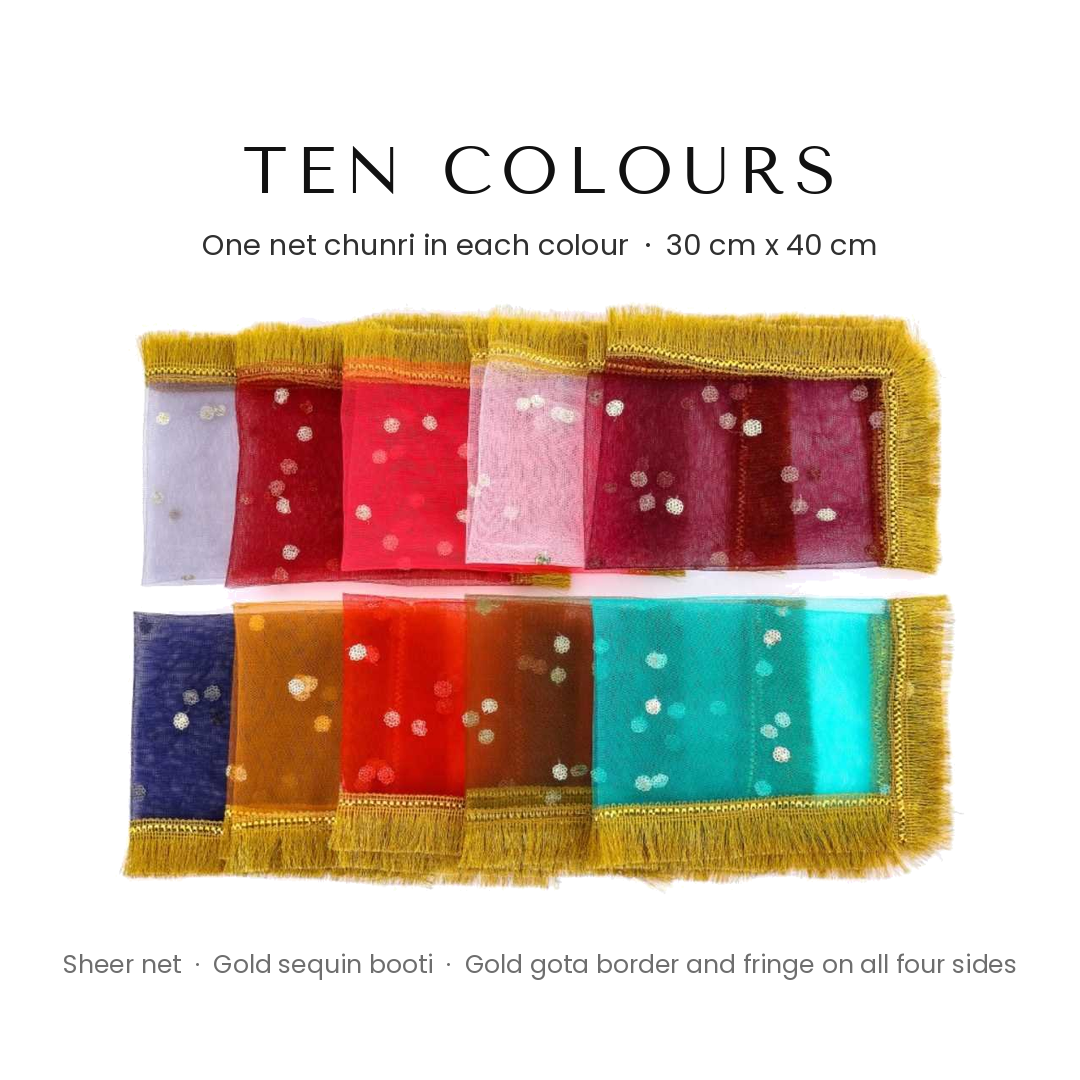
If you are dressing a kalash rather than a murti, the same piece wraps once around the neck below the coconut. For a framed photo, run it along the top edge and let both ends fall.
What each colour is understood to carry
- Orange – energy and warmth, a bright opening to the nine days.
- White – stillness and clarity, which suits Brahmacharini’s austerity.
- Red – the colour most associated with Durga herself, and with shringaar.
- Royal blue – depth and composure.
- Yellow – brightness and learning.
- Green – growth and new beginnings, which is why it suits Katyayani.
- Grey – the transformation of difficulty, fitting for Kalaratri.
- Purple – dignity and ambition.
- Peacock green – the compassion and fulfilment of the closing day.
None of this is prescriptive. Plenty of families keep red through all nine days and nobody considers that wrong. The colour rotation is an observance, not an obligation.
Frequently asked questions
What are the 9 colours of Navratri 2026?
Orange, white, red, royal blue, yellow, green, grey, purple and peacock green, running from Sunday 11 October to Monday 19 October 2026.
When does Navratri start in 2026?
Sharad Navratri 2026 begins with Ghatasthapana on Sunday 11 October, with the muhurat around 06:19 AM to 10:12 AM.
Why are Navratri colours different every year?
Because each colour belongs to a weekday, not to a goddess. The sequence starts from whichever weekday day one lands on, so it shifts annually.
When is Durga Ashtami and Maha Navami in 2026?
Both fall on Monday 19 October 2026, as the two tithis merge. Sandhi Puja runs approximately 10:27 AM to 11:15 AM. Confirm against your local panchang, as regional calendars differ.
When is Dussehra 2026?
Vijayadashami falls on Tuesday 20 October 2026, the day after the merged Ashtami and Navami.
Do I have to follow the colour of the day?
No. It is a widely followed custom rather than a rule. Many households keep red throughout, and some follow only the colours they already own.